


 English
 日本語
日本語 한국어
한국어 русский
 Español
Hair Scissors Factory: How to Evaluate a Manufacturing Partner Before You Order
Home / News / Industry News / Hair Scissors Factory: How to Evaluate a Manufacturing Partner Before You Order
Oct 01, 2026
Content
For a buyer who wants to stock professional hair shears, the phrase “hair scissors factory” sounds straightforward. In practice, however, the distance between a real manufacturer and a trading company with a catalog can be enormous. A genuine factory controls steel purchasing, heat treatment, cutting, assembly, and quality inspection under one roof. That control determines how consistent each box looks and feels, which is exactly what private-label brands, distributors, and salon chains rely on. A factory with its own line can respond to design changes, adapt tolerances, and keep production cost stable. Before you commit, it helps to review the factors that distinguish dependable hair scissors factories from resellers.
Steel selection is the first thing to examine because it limits everything else. A factory that can state its material grades clearly is already ahead of one that only says “stainless steel”. Four common groups appear in professional shears: 440C, VG10, high-nitrogen steel, and high-carbon stainless alloys. Each group balances edge retention, corrosion resistance, toughness, and cost in a different way. These attributes translate directly into how the blade feels against the hair and how long the edge stays sharp between sharpenings.
| Steel type | Edge retention | Corrosion resistance | Typical feel in use |
|---|---|---|---|
| 440C | Good | High | Consistent and easy to resharpen |
| VG10 | Better than 440C | Very high | Crisp and dense |
| High-nitrogen | Excellent | Excellent | Smooth with a resilient edge |
For everyday cutting, 440C remains a workhorse because it combines predictable hardness with straightforward maintenance. Barbers who work all day generally like a steel that can tolerate a quick touch-up on a fine stone. VG10 adds vanadium and molybdenum, which refines the blade structure and gives a more articulate cut, but it also asks for more disciplined sharpening technique. High-nitrogen steel resists pitting and holds a fine edge even in humid salon environments, making it a preferred choice for premium shears and for stylists who cut wet hair frequently. The factory you choose should be able to explain why one steel fits a specific sales channel better than another, not simply offer every material without a recommendation.
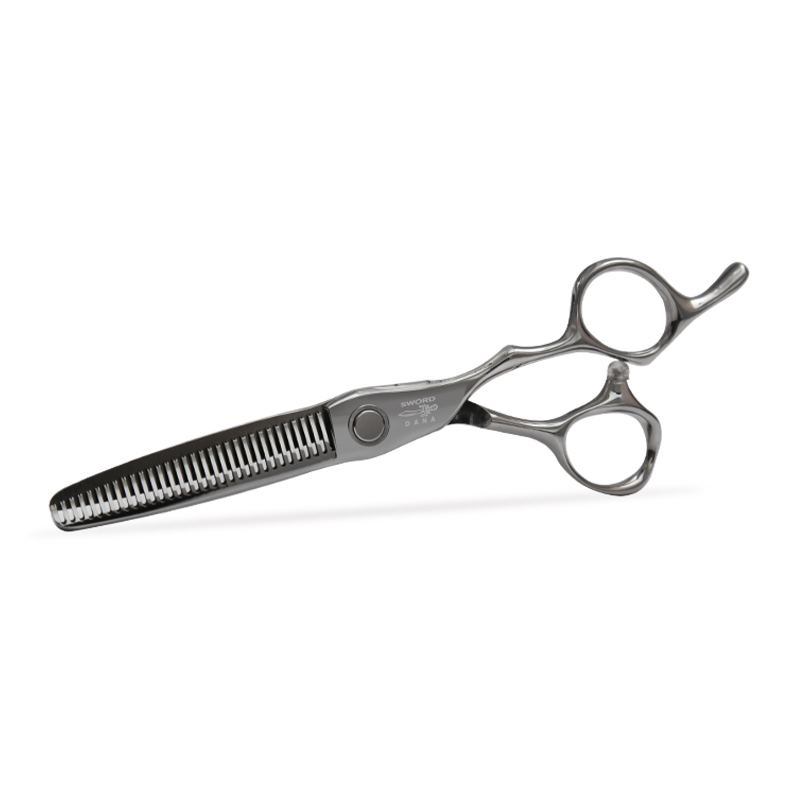 440C Stainless Steel Professional Haircutting and Thinning Shears SeriesThis series suits buyers seeking a reliable everyday steel with predictable hardness and easy maintenance, offering cutting and thinning models in black or silver with ergonomic offset handles.View Product →
A serious hair scissors factory normally runs two complementary processes. CNC milling shapes the blade and scissors body to tight tolerances. Hand work then adjusts the contact surfaces, blade tension, and pivot action. This combination, sometimes called a dual-process production line, avoids two common failures: blades that are geometrically similar but poorly tuned, and hand-finished shears that look artisanal but vary batch to batch.
In practical terms, the CNC stage buys consistency. Every blade leaves the machine with the same profile, which makes later tuning possible on a repeatable basis. Hand finishing then focuses on the last few microns of contact between the two blades. That is where cutting smoothness and ‘draw’ are created. Some factories rely only on automated processing; others still shape everything manually. Both approaches can produce acceptable scissors, but the dual-process factory is better positioned to serve private-label buyers who need both stable production and a distinct cutting feel.
Steel with high nitrogen is particularly sensitive to heat treatment. Temperature and soak time have to be controlled carefully, or the edge can become brittle. Factories that make high-nitrogen models usually pair CNC cutting with manual finishing because the steel responds better to precise blade geometry at the start and fine hand tuning just before assembly. The result is a smooth cutting action with long-lasting edge stability, which is why high-nitrogen shears often appear at the top of a factory’s range.
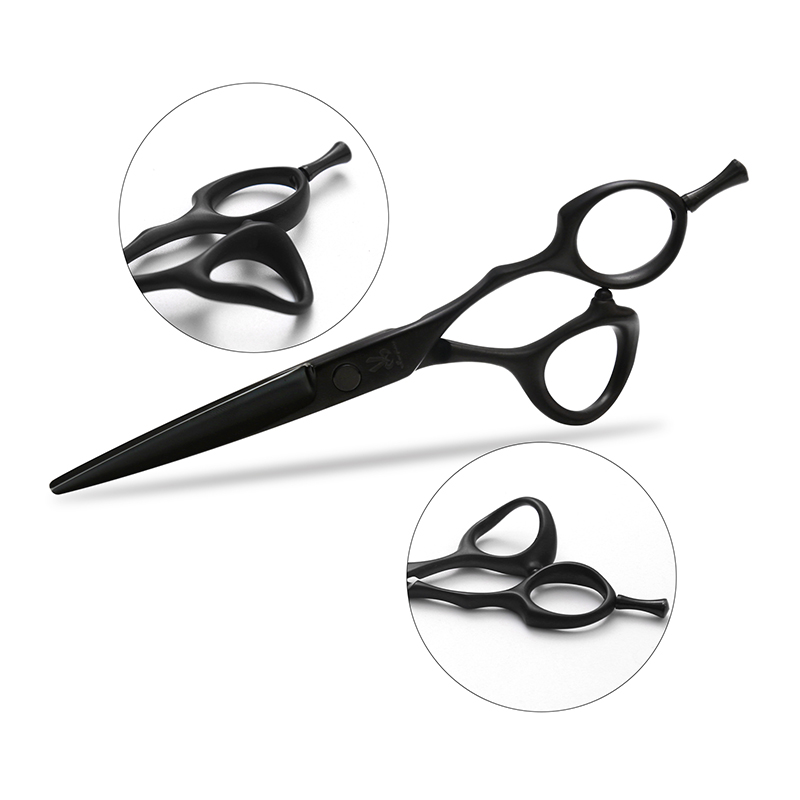 5.75-Inch High-Nitrogen Steel Ergonomic Matte ShearA lightweight high-nitrogen steel shear designed for comfortable back cutting and long sessions, reflecting the factory's CNC precision and hand finishing that supports stable, long-lasting edges.View Product →
Quality control is where a factory separates itself from a trading company. A real manufacturer should be able to show records for incoming steel, heat-treatment logs, Rockwell hardness readings, and final cutting tests. It should also welcome independent inspection. Some factories in China go a step further and work with national quality-testing institutions for regular and random sampling. That kind of third-party involvement is more meaningful than a printed guarantee.
For a buyer, these records matter for a specific reason. A small difference in hardness or blade gap is invisible in one sample but becomes obvious across 500 units. If a factory can show you documented control points, the production batch is far less likely to surprise you. If it cannot show any records apart from the final appearance, you are essentially trusting luck.
Inspect also how the factory handles complaints. A mature factory has a defined rework and replacement procedure. Ask what happens if a percentage of blades arrives with twisted screws or uneven oiling. The answer will tell you more about the long-term relationship than any discount.
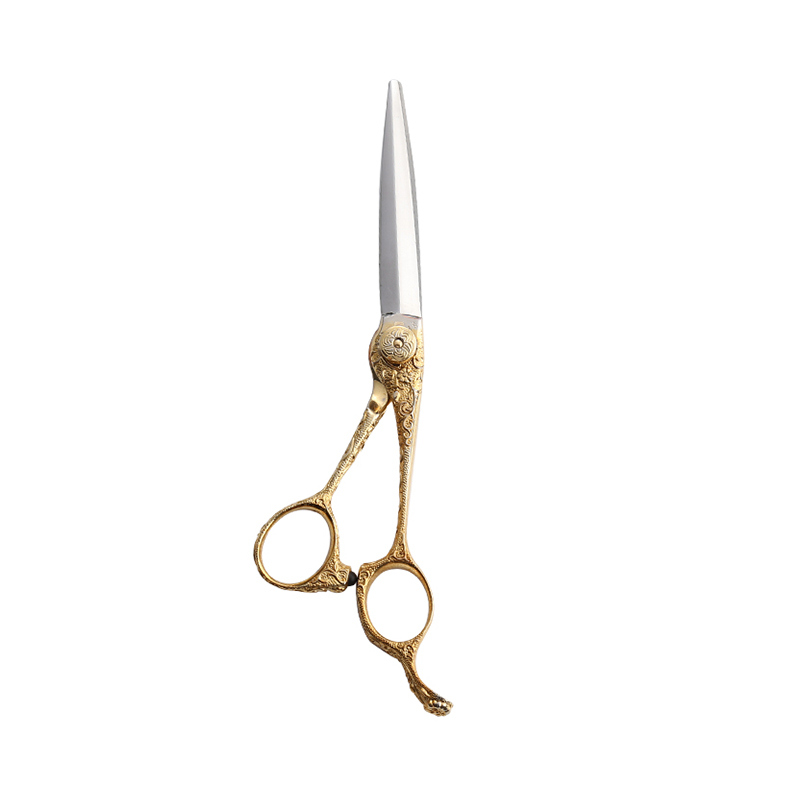
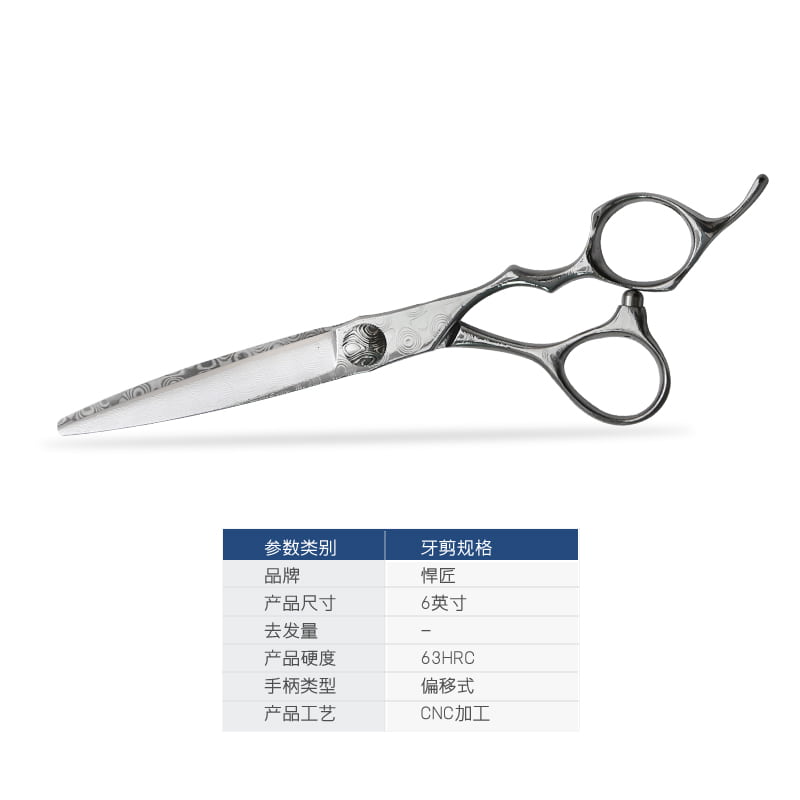 6-Inch Damascus Steel Cutting Shears with Adjustable TensionCombining Damascus aesthetics with high-nitrogen steel at 63HRC, this model offers precise tension adjustment and vibration damping, making it a strong candidate for OEM or ODM customization.View Product →
Private-label buyers usually start with two questions: which models are already in production, and can the factory build a customized version? A direct factory can answer both. OEM covers simple changes such as your logo, packaging, and color of the handles. ODM goes further, allowing the factory to help you develop a new size, finish, or model based on your market feedback. Good ODM support also means asking the right questions about blade length, finger ring shape, and cutting style before manufacturing, rather than treating your order as a routine production run.
A useful pattern is to start with an existing base model, then customize the finish and branding. This shortens development time while still giving you a differentiated product. Once the first batch passes customer testing, you can expand into full ODM projects.
Pay attention to how the factory discusses steel and geometry during the configuration process. If the conversation stops at colors and logos, the factory is not investing much in your project. If they ask about your customers’ hand size, wet-cutting habits, or salon budget, they are helping you avoid a mismatch that no logo can fix.
Even with the right factory, small details determine whether an order runs smoothly. Put quality expectations in writing before approving samples. The list below is a good starting point for hair scissors factory procurement negotiations with any supplier.
Discussing these points early prevents the “sample is fine, production is different” problem that many importers have experienced. Confirm who pays for defective parts in the first shipment, how soon replacements are shipped, and whether the factory can adjust one production detail without redesigning the whole product. A competent hair scissors factory will have clear policies for all of these questions.
Choosing a hair scissors factory is essentially an exercise in verification: who controls the steel, who controls the process, and who can stand behind quality. Look at the factory’s product range, request documentation, and start with a small test order. A manufacturer that can show you repeatable steel grades, manufacturing steps, and quality checks will serve your brand better than one that only supplies a catalog and a low price.
Aug 15,2025
Jul 03,2026
Most scissor importers can spot the difference between a flimsy welded handle and a properly balanc...
What Makes High Nitrogen Steel Hair Scissors Different from Standard Scissors Material Compo...
Your salon brand is growing, and the shears you want to sell need to carry your name, match your cl...
Selecting appropriate hair scissors is a critical decision for professional stylists and barbers, as...
Copyright © 2025 Zhangjiagang Huaxu Hairdressing Tools Co., Ltd. All Rights Reserved

 contact us