


 English
 日本語
日本語 한국어
한국어 русский
 Español
Private Label Barber Shears: A Complete Sourcing Guide for Custom Branded Shears
Home / News / Industry News / Private Label Barber Shears: A Complete Sourcing Guide for Custom Branded Shears
Sep 24, 2026
Content
Building a successful private label barber shears line starts with the manufacturer, not the logo. If the base product is inconsistent, no amount of branding will hold up in a professional salon. The most direct route is to work with a factory that can control both the steel and the finish under one roof. This guide explains how to evaluate private label barber shears suppliers, choose the right blade material, and avoid costly sampling mistakes when building your own branded shear collection.
Private label barber shears allow a salon brand, distributor, or barber academy to sell scissors under its own name without investing in heavy manufacturing equipment. Unlike buying unbranded wholesale shears, a private label program gives you control over what the customer sees and remembers: the logo, the packaging, the handle finish, and the perceived quality. For a mature market, this kind of product differentiation is often the difference between being a commodity supplier and being a preferred brand.
For most importers, the decision is not whether to offer private label scissors but how quickly they can move from a generic product to a recognizable brand. As barber schools and influencer-driven recommendations spread, a shear with a distinctive color or an engraved name carries more social proof than an unbranded silver tool.
For barber shears, the factory audit is more important than the price list. You need to verify that the supplier has real production control, not just a trading desk. Start with four areas: steel sourcing, machining capability, assembly and inspection, and customization bandwidth.
Production location matters because it affects lead times, communication, and the ability to make last-minute changes. Factories that have been making scissors for more than a decade usually understand the balance between edge sharpness and structural stability better than a new workshop can. In our case, the production site in Zhangjiagang combines CNC precision machining with handcrafted finishing, and we regularly send technicians to Korea for training. Our quality control system also includes scheduled inspections by a national hardware testing institute. You should ask for similar evidence when auditing any manufacturer.
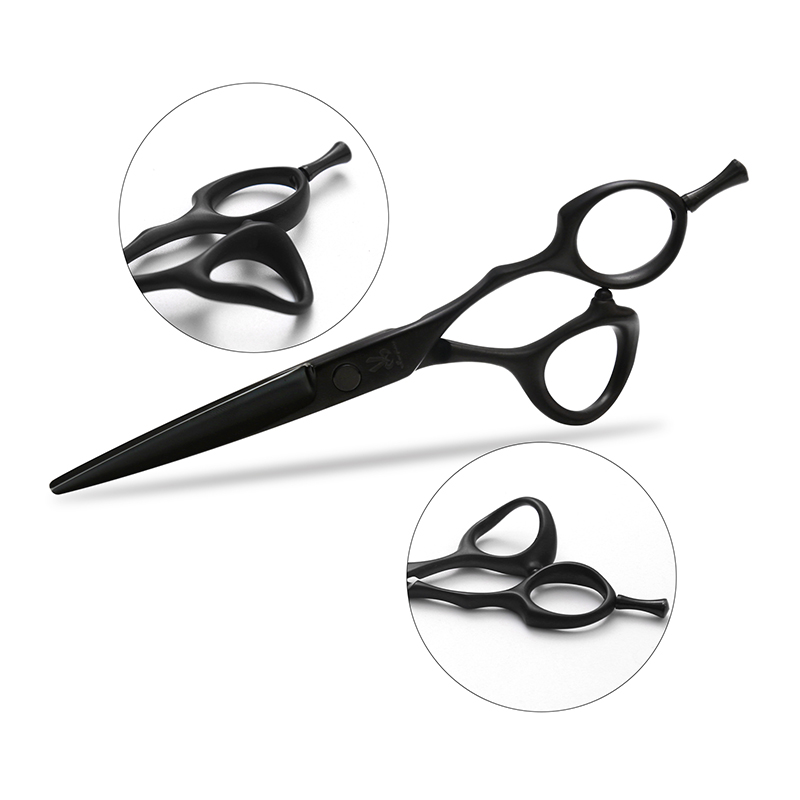 5.75" High Nitrogen Steel Matte Black Barber ShearThis lightweight 5.75-inch shear uses high-nitrogen steel for a sharp, durable edge and comfortable handling, making it a dependable choice for extended cutting sessions.View Product →
The steel grade determines how often the scissors need sharpening, how they feel during long cutting sessions, and how they look after months of use. Most professional barber shears are made from one of three groups: 440C stainless steel, VG10 high-carbon steel, or high-nitrogen steel. Each group handles edge retention, corrosion resistance, and hardness differently.
| Steel Grade | Typical Hardness | Corrosion Resistance | Edge Retention | Best For |
|---|---|---|---|---|
| 440C | HRC 57-59 | Good | Good with regular maintenance | General cutting, thinning, everyday salon use |
| VG10 | HRC 60-62 | Very good | Excellent | Premium shears, precise slicing, heavy daily use |
| High-nitrogen steel | HRC 60-61 | Excellent | Excellent | High-end cutting, long intervals between sharpening |
Do not treat hardness alone as the deciding factor. A very hard blade can be brittle if the edge angle is wrong, while a softer blade may bend or dull quickly. Beyond steel grade, you must decide between a beveled edge and a convex edge. Beveled edges are more forgiving and easier to maintain, while convex edges give a smoother, more precise cut when rolled properly by the cutting master. Many private label lines include both options so the barber can use the same brand for heavy cutting and fine finishing.
For a private label line, choose steel based on the segment you serve. If your customers are barbers who prefer a crisp, precise cut, VG10 or high-nitrogen steel is a safer premium choice. If you are entering the budget segment, 440C remains a reliable and cost-effective option.
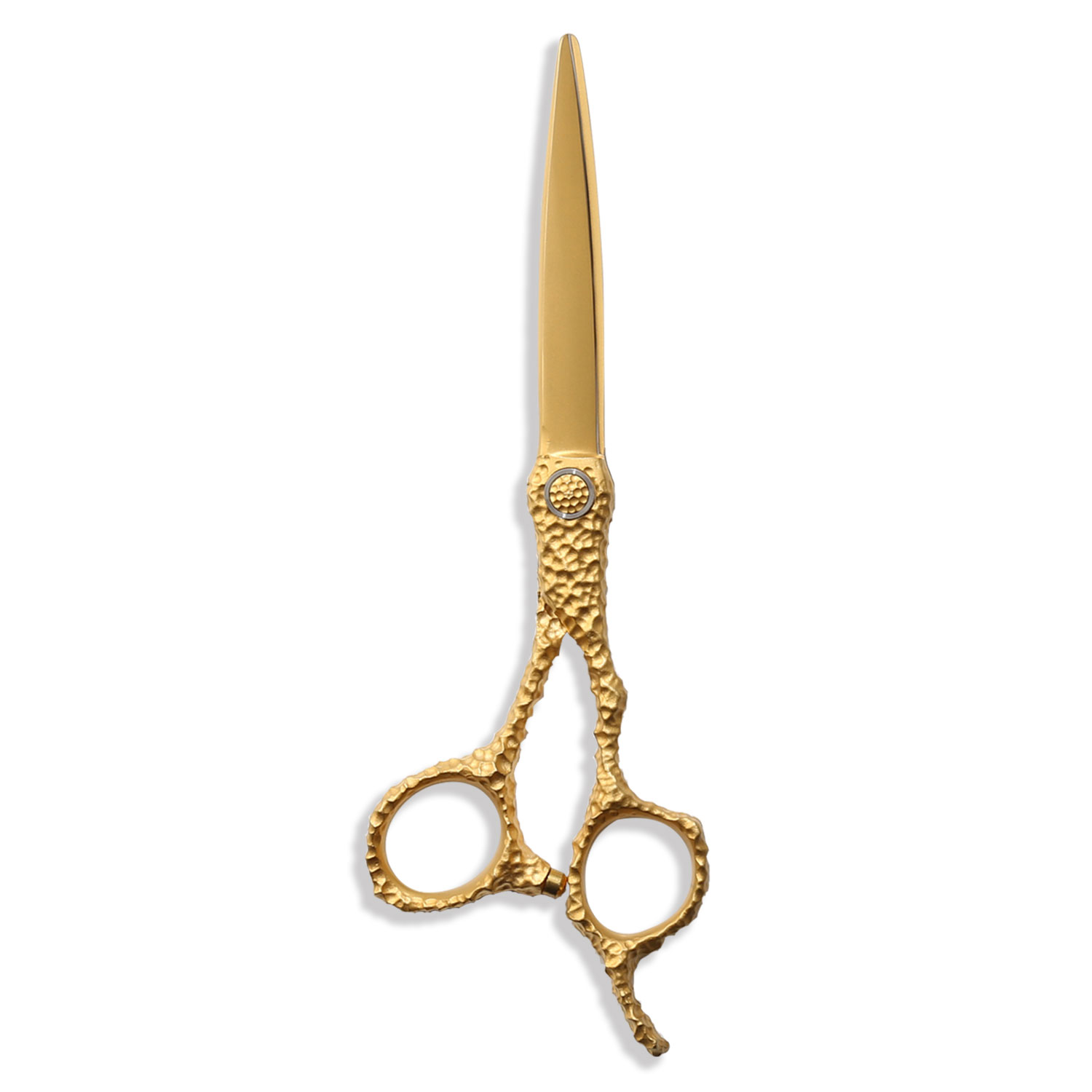
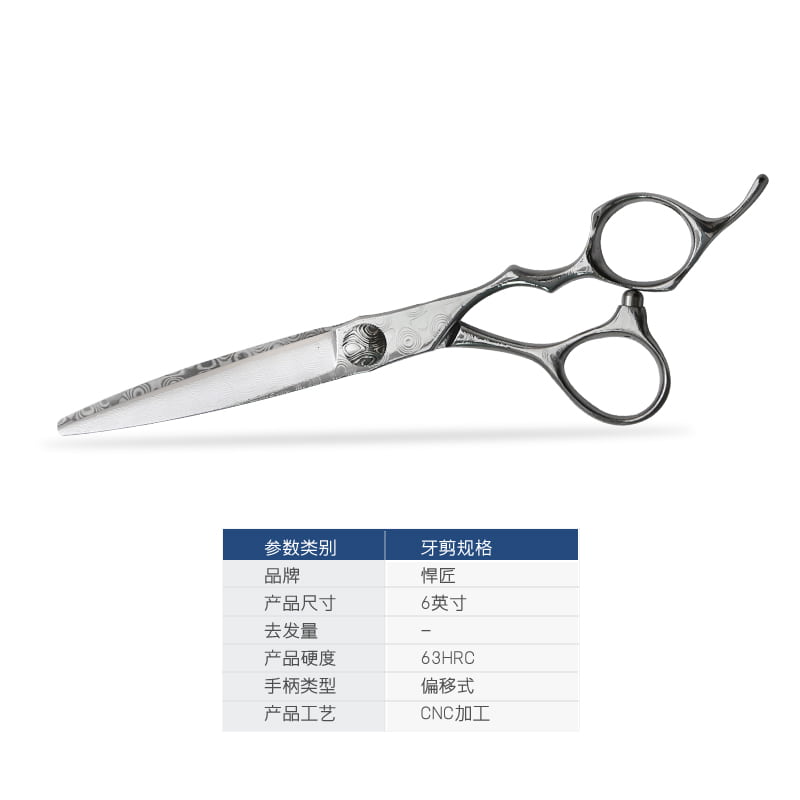 6-Inch Damascus Steel Shears with High-Nitrogen Steel CoreCombining striking forged patterns with high-nitrogen steel hardness, this 6-inch model offers precision and balance suitable for stylists seeking premium performance.View Product →
A private label shear is not an off-the-shelf product with a sticker. The customization options you choose directly influence the perceived value and the price you can command. Professional barbers respond to small details, so it pays to specify them carefully.
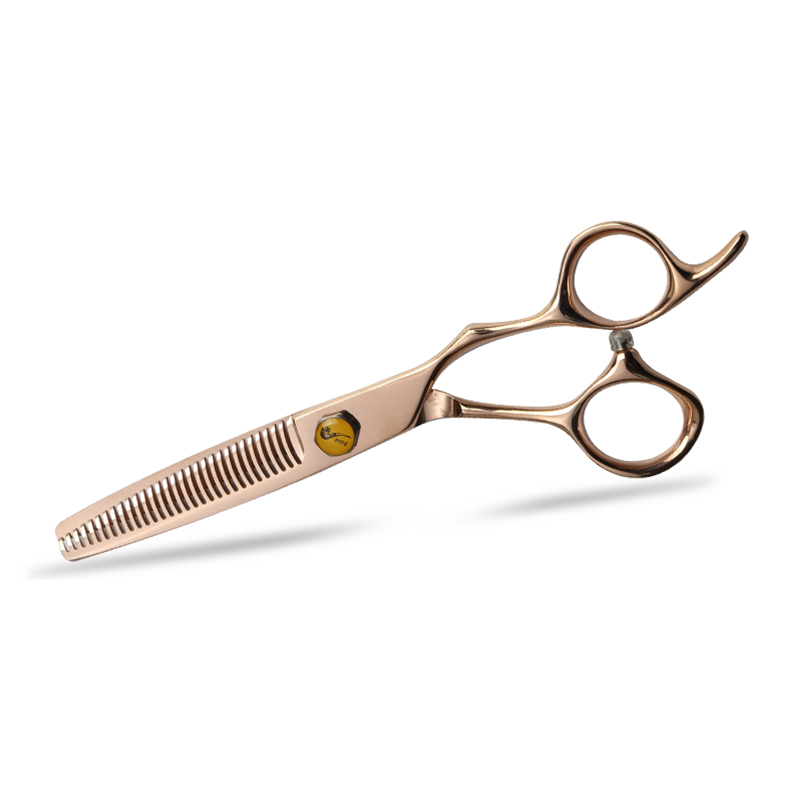
When you work with an ODM partner, you can also request new handle shapes, custom sizes, or a special finish that is not yet available in the market. This is how many salon brands build a signature look that is difficult to copy. For a practical example, a rose-gold finish on 440C steel creates a distinct retail identity while keeping costs moderate.
Consistency is what separates a professional private label line from a random selection of engraved scissors. If a customer buys one model and later replaces it with the same model from the same brand, the weight, tension, and cutting feel should be identical. That consistency depends on the factory’s quality management, not just on the sample you approved.
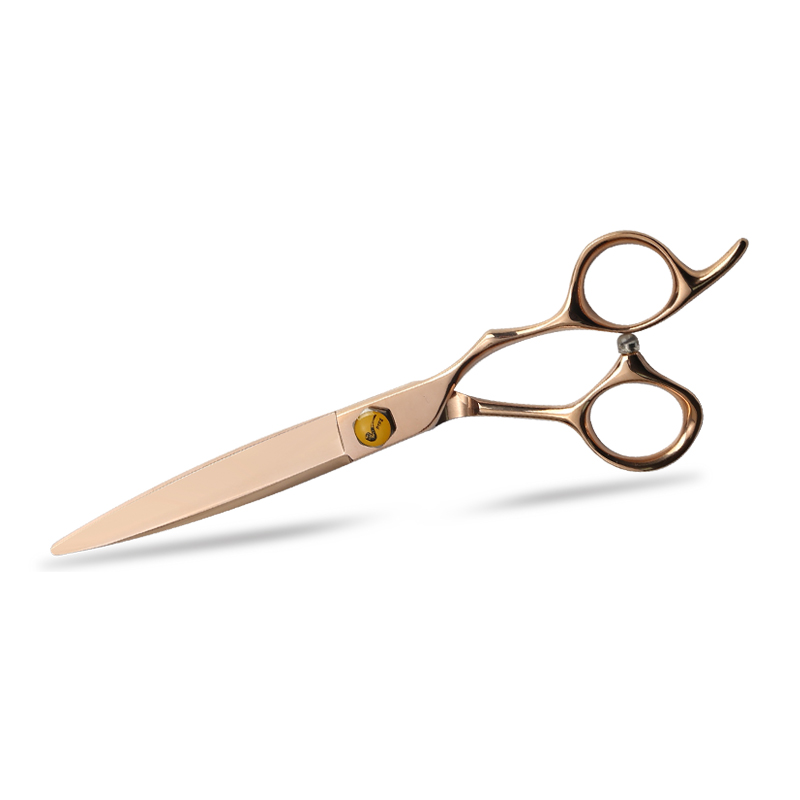 Rose Gold 440C Steel Professional Haircutting ShearsBuilt with corrosion-resistant 440C steel and an ergonomic handle, this rose gold shear supports consistent feel and reliability, a solid option for private label buyers.View Product →
A reliable private label barber shears order follows a straightforward sequence. Knowing this sequence helps you avoid miscommunication and delays.
Sampling is especially important for private label barber shears. A model that looks good in a catalog can feel different in the hand because of weight distribution or blade play. Always test at least two or three samples and compare them side-by-side. You can browse the full hair scissors collection to shortlist models, and for a deeper buying checklist, read this guide on choosing hair scissors.
Most factories will have a minimum order quantity per model and a lead time that depends on the batch size and finishing complexity. Keep your first order small enough to test the market, but large enough to benefit from bulk pricing. A transparent supplier will state the MOQ and lead time clearly in the quotation.
Private label barber shears succeed when the factory, steel, and customization choices are aligned. Start with a clear picture of your target customer, validate the factory’s production and inspection system, and never skip the sample stage. If you keep those fundamentals in place, your branded shears can earn trust in the barber community and support a sustainable product line for years.
Jul 03,2026
By the end of a long day behind the chair, many stylists feel a familiar tightness in the thumb, wr...
Your salon brand is growing, and the shears you want to sell need to carry your name, match your cl...
A salon owner spreads three new shears across the counter. One blade is stamped 440C, the second is...
After years behind the chair, many stylists notice a dull ache at the base of the thumb or a stiffn...
Copyright © 2025 Zhangjiagang Huaxu Hairdressing Tools Co., Ltd. All Rights Reserved

 contact us