


 English
 日本語
日本語 한국어
한국어 русский
 Español
Swivel Thumb Hair Scissors: How They Reduce Strain and Improve Precision
Home / News / Industry News / Swivel Thumb Hair Scissors: How They Reduce Strain and Improve Precision
Sep 10, 2026
Content
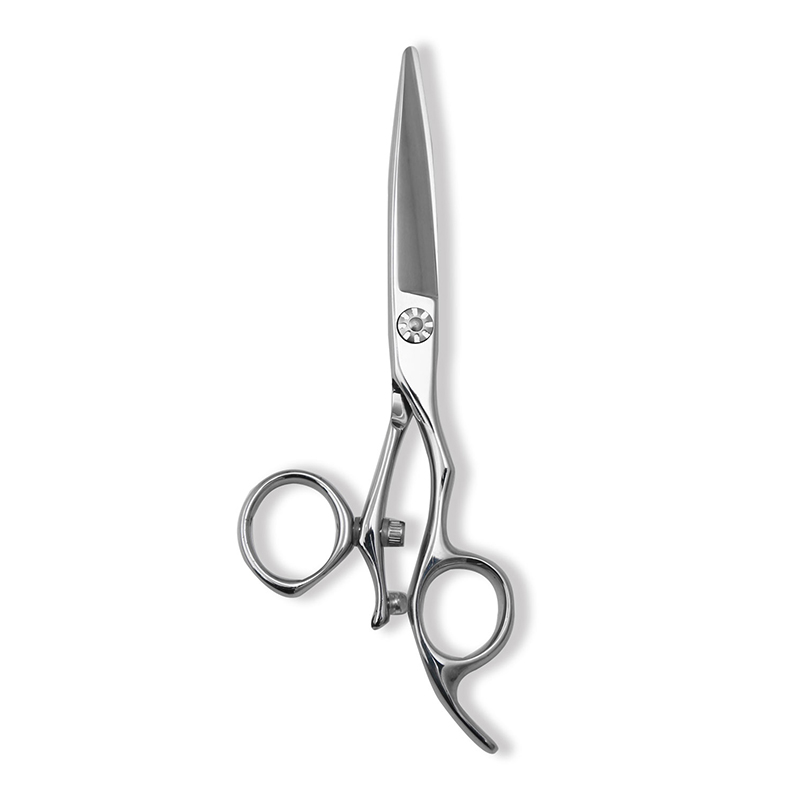
After eight hours of cutting, sectioning, and combing, the ache in a stylist's thumb is hard to ignore. The thumb is the control center of nearly every scissor movement, and when the ring forces it to twist with every change of angle, fatigue builds quickly. Swivel thumb hair scissors were designed to address that problem directly. By letting the thumb ring rotate independently, they reduce joint strain, keep the blade on its intended line, and make long sessions noticeably easier on the hand.
A swivel thumb shear replaces the rigid connection between the thumb ring and the shank with a rotating joint. The ring moves around the thumb, usually through a controlled range rather than a full free spin, so the blade can change angle without the hand having to twist. Some models include a lock or adjustment screw that lets you fix the ring at a chosen angle when you need a completely stable grip.
This mechanism is most useful for techniques that demand frequent angle changes, like slicing, point cutting, and working around the ear or crown. With a conventional fixed-ring shear, every one of those adjustments is paid for by your own joints. With a swivel, the mechanism absorbs that movement instead. It is a natural fit for stylists who cut full-time, barbers who handle high daily volume, and groomers who hold scissors for hours with the wrist in a fixed position. The swivel does not change your cutting technique; it changes how much resistance your hand meets during the work.
The clearest benefit is a reduction in repetitive thumb motion. Less twisting of the thumb inside the ring means less friction on the skin, less strain on the tendon, and a lower risk of the kind of overuse injuries that end careers. Stylists who move to a swivel typically report two things: less hand pain at the end of a full day, and a shorter adjustment period than they expected.
The second benefit is precision. Because the blade follows the natural arc of your hand instead of fighting it, the cutting edge maintains a cleaner line through the hair. This matters most in long sectioning work and in cuts that require consistent tension from the base to the tip of the blade.
Swivel shears are not automatically better for every stylist. The right choice depends on how much angle variation your daily work actually requires. The comparison below lays out the practical differences.
| Factor | Swivel Thumb Shears | Fixed Thumb Shears |
|---|---|---|
| Wrist load | Lower; ring rotates with the hand | Higher; thumb must rotate inside the ring |
| Fatigue over a full day | Reduced, especially in angle-heavy work | More noticeable after long appointments |
| Control | Excellent for slicing, point cutting, and detail work | Excellent for stable, straight cutting strokes |
| Adaptation time | A short break-in period is normal | None; familiar to most stylists |
| Best-suited tasks | Precision cuts, long sectioning, textured styles | Scissor-over-comb, blunt lines, classic cuts |
Most working stylists eventually own both. If you are investing in your first swivel pair, use it for your most demanding cutting sessions for the first two weeks, and keep a fixed-ring pair as a backup while your hand adapts.
The rotating thumb ring only performs as well as the blade it controls. A smooth swivel on a poorly heat-treated blade is still a frustrating tool. Three material and construction factors carry the most practical weight.
440C stainless steel is the most common professional-grade option. It holds a sharp edge through regular daily work, resists corrosion well, and remains affordable enough for everyday use. For a stylist starting with a swivel design, a swivel handle all-purpose straight shear in 440C steel is a practical, well-balanced first choice. The same series also includes dedicated thinning and slicing models if you want to build a matched set.
VG10 steel sits a step higher in edge retention and hardness. It is a strong option for stylists who cut dense or dry hair daily and want to extend the time between sharpening services. High nitrogen steel is the third common option, favored for its useful combination of hardness and corrosion resistance, and usually supplied with a matte or dark finish that reduces glare under salon lighting. The steel grade also affects blade weight; a heavier blade can make the swivel feel less responsive, so blade thickness and hollow grinding matter as much as the material itself.
Purchasing professional scissors is a bigger commitment than a tool-bag accessory. The wrong pair costs you money, time, and comfort. These are the points that carry the highest purchase risk.
The tension screw must allow fine adjustment, and the blades should close with even pressure from root to tip. If you feel a soft spot at the end of the closure, the shear was not ground consistently, and you will struggle with clean cuts from day one.
Test whether the thumb ring rotates smoothly and whether you can set a fixed angle. Free rotation is convenient for most work, but the ability to lock the ring gives you precision control for cutting over the comb or trimming along a straight line. A model without a lock is still usable, but less versatile.
A swivel mechanism adds a small amount of mass to the thumb side of the shear. Good engineering keeps the balance point near the center of the handle so the added weight is barely noticeable. Hold the shear open in cutting position for a few seconds; if the thumb side feels heavy, that weight will multiply over a workday.
A single pair cannot do everything at a professional level. Pairing your main swivel straight shear with a dedicated texturizing tool gives you far more range. A willow leaf all-purpose slicing shear is a strong companion for removing bulk and adding soft texture, and it takes pressure off your main cutting shear. For broader guidance on specification choices, the detailed breakdown of factors to consider when choosing hair scissors covers blade size, steel differences, and handle types in more depth.
Daily care for swivel thumb scissors follows the same routine as any professional shear, with one extra step. Wipe the blades clean after each client, removing hair, oils, and product residue. At the end of the day, apply a single drop of scissor oil to the pivot, then open and close the blades slowly to spread the oil through the joint.
Because the swivel mechanism is a moving component, it needs periodic inspection. If the thumb ring becomes gritty, stiff, or noisy, do not force it. Take the shear to a service professional for disassembly and lubrication of the rotating assembly.
Swivel thumb hair scissors are a direct answer to a problem every stylist knows: the toll that repetitive thumb rotation takes on a career built on precision. A well-made swivel pair reduces joint strain, supports cleaner blade control, and adapts to the natural movement of your hand. Choose a model with a solid steel blade, adjustable tension, and a swivel lock, and the daily difference in your hand will confirm the decision within the first week.
Apr 20,2026
Jul 03,2026
What Makes High Nitrogen Steel Hair Scissors Different from Standard Scissors Material Compo...
Industry News Outline: Hair Scissors Defining Modern Hair Scissors Modern hair scissors are designed...
Six hours of continuous cutting is when the hand starts to talk back. The ache usually appears in t...
For a buyer who wants to stock professional hair shears, the phrase “hair scissors factory” sounds ...
Copyright © 2025 Zhangjiagang Huaxu Hairdressing Tools Co., Ltd. All Rights Reserved

 contact us